News ·
Where end of line automation actually helps a protein plant
Thanksgiving week puts every turkey and protein plant under peak seasonal demand. Here is a plain look at where end of line automation helps most in tray packing, label inspection, case packing, and palletizing.
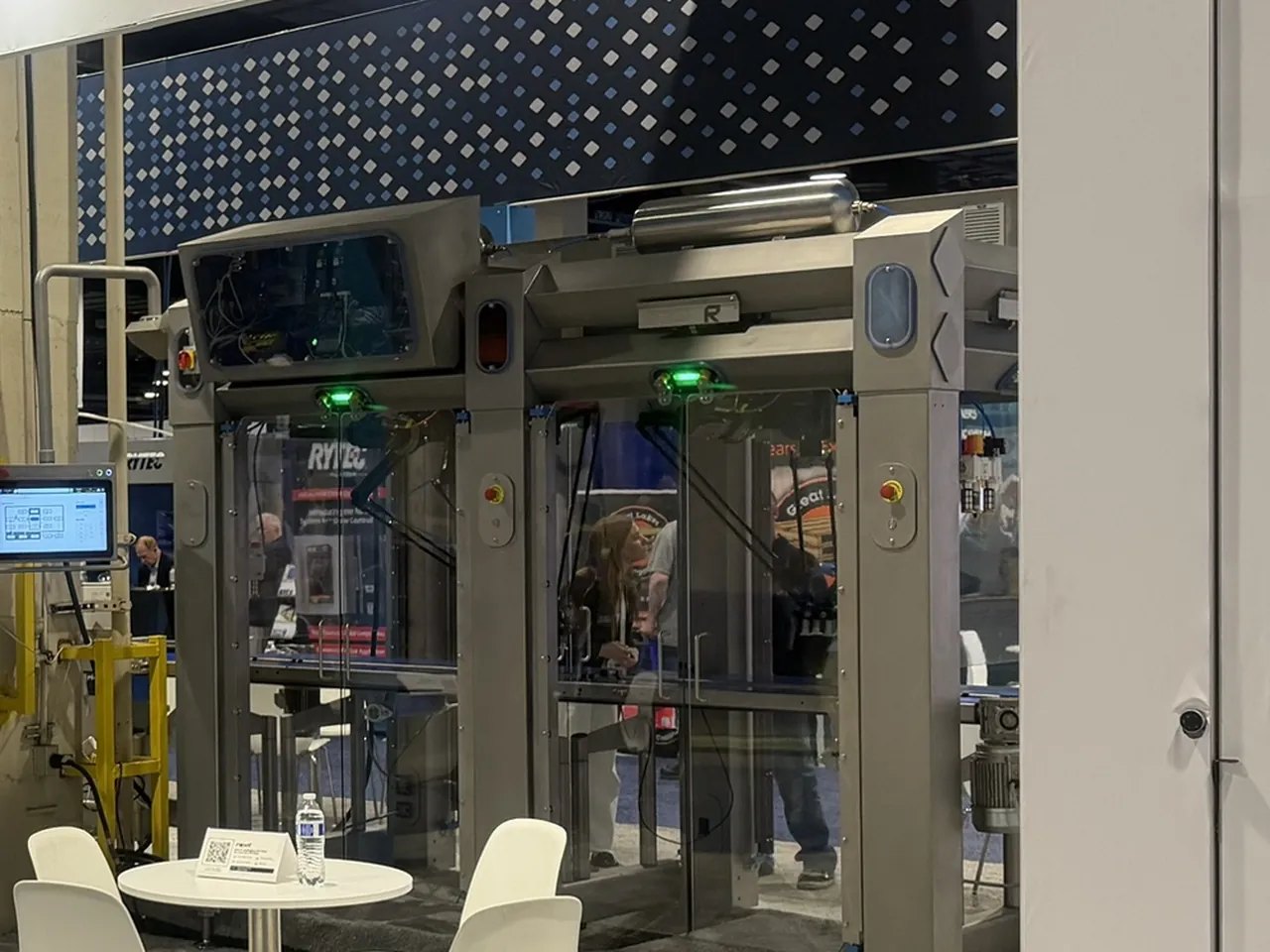
By Abe Alassaf, Chief Business Development Officer
For most families, Thanksgiving is one busy Thursday in the kitchen. For turkey, ham, poultry, and prepared protein plants across the Midwest and Southeast, the push started months ago. The USDA National Agricultural Statistics Service puts 2026 turkey production at about 199 million birds, up 3 percent from 2025, led by Minnesota at 34.0 million and North Carolina at 29.5 million.
When seasonal volume climbs on top of everyday retail and foodservice orders, plant managers do not need a lecture about factory trends. They need finished trays sealed cleanly, labels matched to the right recipe, master cases closed on time, and pallets wrapped before the reefer pulls away from the dock.
Start where automation actually fits
In protein processing, not every job belongs to a robot. Primary cutup, trimming, and deboning still depend heavily on human eyes and knife skill because no two birds or cuts arrive identical. Trying to automate the most variable step first is how plants burn capital and lose trust on the floor.
The work that stalls a protein plant during peak weeks sits at the end of the line. Placing portions into trays, checking top and bottom labels before cases seal, packing sealed trays into corrugated cases, and stacking heavy cases onto pallets are cold, wet, repetitive jobs where turnover hits hardest.
The Bureau of Labor Statistics counts 542,990 people working in animal slaughtering and processing in the United States. Every plant manager knows what keeping those seats filled feels like on a second shift in November: when two packing positions go unfilled, the entire upstream line slows down to match the slowest station at the back.
Tray loading and case packing under changeover pressure
Holiday runs rarely stay on one SKU for a whole week. A single line may switch from plain breasts to seasoned roasts, private label retail trays, and club store packs inside the same shift. When people are stretched across changeovers, tray placement drifts, seals get fouled by stray product edges, and cases back up at the taper.
End of line robotic cells earn their keep here because recipe changeovers happen on the operator panel rather than through a half hour mechanical rebuild. Putting consistent robotic placement into trays and automatic loading into corrugated cases stabilizes line speed without forcing overtime on the same shrinking pool of night shift workers.
Catching label and allergen mistakes before cases seal
Peak weeks also create the highest risk of the most preventable recall in meat and poultry: the wrong label on the right product. Holiday glazes, marinades, breadings, and seasonal sauces bring milk, wheat, soy, egg, and sesame onto lines that ran unseasoned product an hour earlier.
The problem is persistent. The USDA Food Safety and Inspection Service oversaw 42 recalls in 2025, up from 34 in 2024, and undeclared allergens were the leading cause of recalls of USDA regulated products in 2025.
Asking a tired operator to read small date codes, lot numbers, and allergen panels on every tray moving past a belt is an unfair test. Inline vision inspection checks label presence, placement, text, barcodes, and date codes on every single pack at line speed and kicks out only the bad package before it ever reaches a case.
Taking the heaviest lift out of palletizing
Right behind the case sealer sits the toughest job in any cold room: stacking heavy master cases onto pallets hour after hour. Palletizing automation does not need fancy justification on a protein floor. It removes repetitive strain from the coldest corner of the plant, builds square loads that survive transit, and lets experienced operators move up to running lines instead of lifting boxes all night.
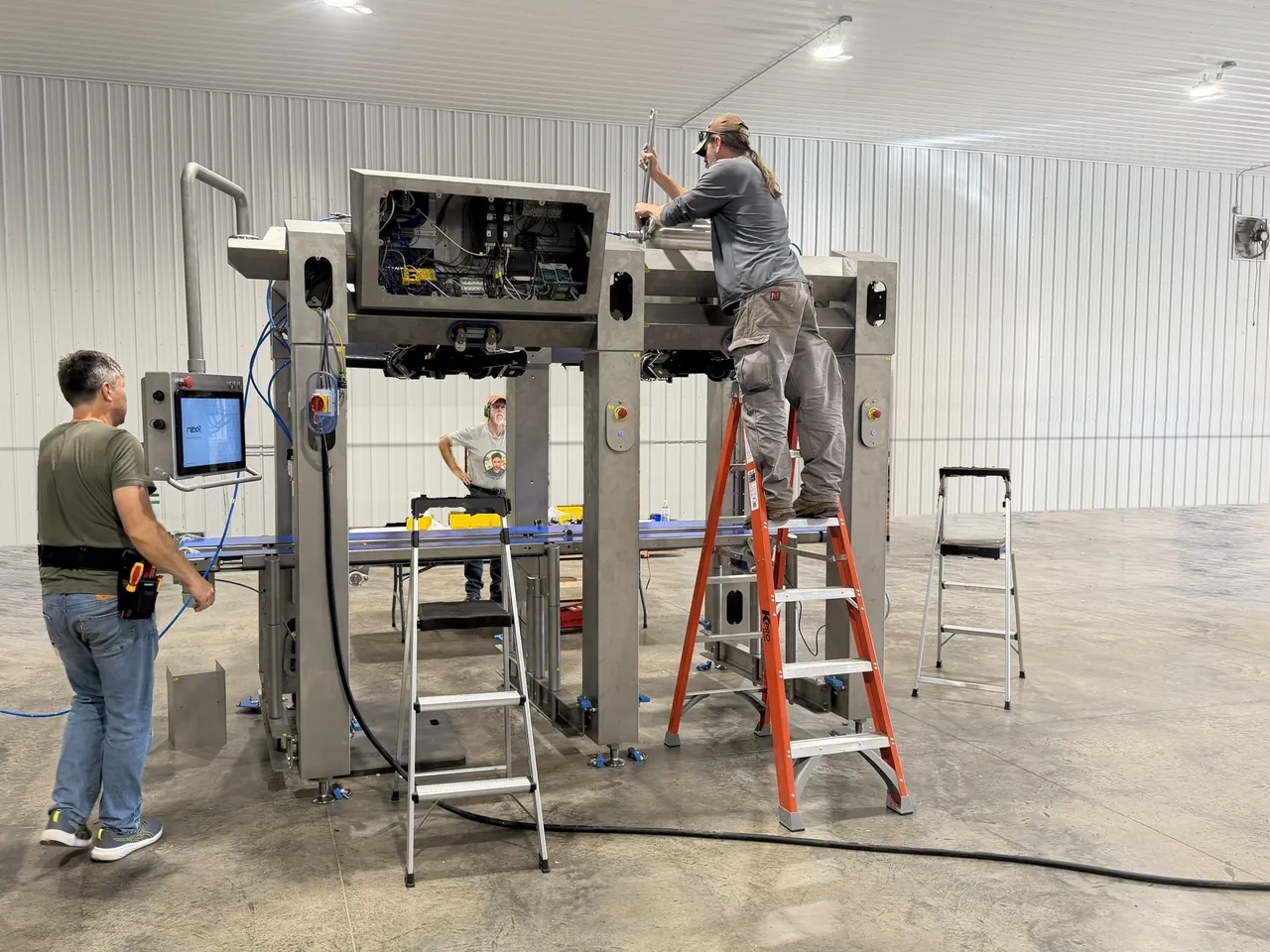
How rexR approaches protein lines
At rexR, we assemble modular stainless cells in Athens, Ohio for the exact jobs at the back of a food plant: delta pick and place into trays at 60 cycles per minute, AI vision that checks labels and rejects single items without halting the line, secondary case packing, and palletizing. Plants can buy a cell outright or lease it monthly depending on how their capital calendar is set up.
Every machine we put on a floor is backed by remote diagnostics first, and when a line needs hands on the equipment, a technician is on your floor within 24 hours through our United States service partner, SkyForge Automation. If you want to look at where end of line automation makes sense for your plant next year, talk to our team.
From everyone at rexR, thank you to the growers, processors, maintenance crews, and plant teams keeping food moving to tables across the country this Thanksgiving.
Sources
- USDA National Agricultural Statistics Service, Turkeys Raised, September 2026 (about 199 million turkeys in 2026, up 3 percent; Minnesota 34.0 million; North Carolina 29.5 million): https://esmis.nal.usda.gov/sites/default/release-files/796080/tuky0926.pdf
- U.S. Bureau of Labor Statistics, Occupational Employment and Wage Statistics, May 2023, NAICS 311600 Animal Slaughtering and Processing (542,990 total employment): https://www.bls.gov/oes/2023/may/naics4_311600.htm
- Food Safety Magazine, recall and regulatory trends (FSIS oversaw 42 recalls in 2025 compared to 34 in 2024): https://www.food-safety.com/articles/11640-recall-litigation-and-regulatory-trends-worrisome-changes-bring-similar-resultsfor-now
- The Provisioner, 2025 recalls year in review (undeclared allergens the top cause of USDA regulated recalls in 2025): https://www.provisioneronline.com/articles/120161-2025-recalls-the-year-in-review